The rich biodiversity of India is filled with many rare and exotic species, that are only found in India. Wildlife tours generate a lot of revenue for the country every year. There are around 3,900 tigers that remain in the wild across the globe, according to the World Wildlife Fund (WWF) out of which 2967 tigers are found in India, which is 70 percent of the global tiger population.
Every year travelers flock to the tiger reserves just to a glimpse of the legendary cats that rule in these deep dark jungles of the country. India is the home to the maximum population of these famous cats like the Royal Bengal Tigers.
To meet the great king and his subjects in the wild, check out the wildlife tour packages India on our website. And if you are lucky enough, you can also spot the swamp tigers-the most efficient predators on Earth. These tigers that can swim for kilometers and cross big rivers are also found in the delta forests of Indian Sundarbans. The elusive beasts of the forests of India have helped the country to draw the attention of the entire world towards itself.
We’re proud to be recognized by respected names in the travel industry. Every award tells a story of dedication, teamwork, and trust.
Best Customized Travel Experience
Top Adventure Tour Agency
Most Loved Local Tours
Top-Rated Travel Agency 2024
Wildlife tour packages in India are affordable and allow you to explore a lot. You will get an in and out chance to know more about Indian Wildlife as our wildlife tour operators customize tiger safari journeys for you with your every specific wish and offer group tiger tours that will give a privileged insight into nature conservation. All our work is directly contributed towards nature conservation and is conducted sustainably. We aim to provide satisfied and memorable tiger safari experiences, focusing on quality service and competitive pricing. Our travel solutions are customized to meet every traveler’s needs.
During the tour, there is a great opportunity to get a glimpse of Tigers as Ranthambore and Sariska have a significant number of Tigers. Three main destinations known as the golden triangle are very popular in tiger safaris.
The diversity of India’s land also features natural vegetation with a rich variety of Fauna. Ancient traditions showed links between the people and the natural environment. Conservation and protection of wildlife is still a part of life in rural India. More than 1200 Birds and 350 different mammals as well as thousands of Fishes, Amphibious, and reptiles are part of Indian Wildlife. Some of them are found or known only in India.
The classic African safari features a huge variety of wildlife on land, water, and sky, but the main attractions for most travelers are the big cats: the lion, the cheetah, and the leopard. It is very easy to see tigers on safari and possible to view all the species in a single trip. Wonder how wonderful that will be. Each has its fans, and all are beautiful and compelling, but none can match the grandeur of the biggest of the big cats, the tiger, which you will never see on an African safari. You have to make a special trip to see the tiger, but it’s worth it because the tiger is that special. The King of the Jungle moniker bestowed on lions is more a case of good marketing than reality – the tiger is not just the king of the jungle, it is the king of pretty much everything.
The classic African safari features a huge variety of wildlife on land, water, and sky, but the main attractions for most travelers are the big cats: the lion, the cheetah, and the leopard. It is very easy to see tigers on safari and possible to view all the species in a single trip. Wonder how wonderful that will be. Each has its fans, and all are beautiful and compelling, but none can match the grandeur of the biggest of the big cats, the tiger, which you will never see on an African safari. You have to make a special trip to see the tiger, but it’s worth it because the tiger is that special. The King of the Jungle moniker bestowed on lions is more a case of good marketing than reality – the tiger is not just the king of the jungle, it is the king of pretty much everything.
The classic African safari features a huge variety of wildlife on land, water, and sky, but the main attractions for most travelers are the big cats: the lion, the cheetah, and the leopard. It is very easy to see tigers on safari and possible to view all the species in a single trip. Wonder how wonderful that will be. Each has its fans, and all are beautiful and compelling, but none can match the grandeur of the biggest of the big cats, the tiger, which you will never see on an African safari. You have to make a special trip to see the tiger, but it’s worth it because the tiger is that special. The King of the Jungle moniker bestowed on lions is more a case of good marketing than reality – the tiger is not just the king of the jungle, it is the king of pretty much everything.
The classic African safari features a huge variety of wildlife on land, water, and sky, but the main attractions for most travelers are the big cats: the lion, the cheetah, and the leopard. It is very easy to see tigers on safari and possible to view all the species in a single trip. Wonder how wonderful that will be. Each has its fans, and all are beautiful and compelling, but none can match the grandeur of the biggest of the big cats, the tiger, which you will never see on an African safari. You have to make a special trip to see the tiger, but it’s worth it because the tiger is that special. The King of the Jungle moniker bestowed on lions is more a case of good marketing than reality – the tiger is not just the king of the jungle, it is the king of pretty much everything.
The tiger is a true super predator, not just the top of its food chain but dominant in virtually every respect, with no close number two and nobody to steal its food. There is a recorded incident where a crocodile tried doing just that and the tiger swam out into the lake and killed it. A record tiger clocks in at twice the weight of the average adult male African lion, but besides being by far the largest feline, it is fast, agile, and incredibly powerful, both on land and as a swimmer, rare among cats. But most importantly, it is beautiful.
Bengal tiger combines the power and dominance of the lion with the perfect coat, beauty, and compelling eyes of the leopard, regarded by almost every safari-goer who sees one as the most beautiful of Africa’s cats. To see the tiger in the wild is to see nature at its most awesome. This is why interest in tiger safaris is growing fast, the next step for many who have tried the classic African version and loved it. The best place to see tigers is in India, and the very best place on earth for a tiger safari in Ranthambore National Park and its surrounding protected reserves, where both Queen Elizabeth and President Clinton have visited to do just that.
Ranthambore was declared a protected “Project Tiger” reserve by the Indian government in 1970, and it is estimated that around 90% of all commercial images of tigers, from postcards to coffee tables books to magazine illustrations, have been shot here. It is a photographer’s dream and semi-permanent home to film these tigers. During safari tours, you can also get beautiful pictures of these wonderful cats.
You can Go on a tiger’s trail, Hike up to Ranthambore Fort, Jungle Safari in Ranthambore National Park, Visit Kachida Valley, Visit Ranthambore Schools of Art, Walk around Padam Talab, and many other adventurous activities to do.
A 19th-century private hunting reserve and country estate for a Maharajah, the 150 walled square miles of the main park is one big historic ruin, full of crumbling temples, buildings, lakes, and islands, all overlooked by an ancient hilltop fort, just a perfect setting for such a regal animal. This is why interest in tiger safaris is growing fast, the next step for many who have tried the classic African version and loved it. But tigers are harder to see in the wild than their three big cat counterparts, solitary creatures with large territories, and absent from Africa. The best place to see them is in India, and the very best place on earth for a tiger safari in Ranthambore National Park and its surrounding protected reserves, where both Queen Elizabeth and President Clinton have visited to do just that. Ranthambore was declared a protected “Project Tiger” reserve by the Indian government in 1970, and it is estimated that around 90% of all commercial images of tigers, from postcards to coffee tables books to magazine illustrations, have been shot here. It is a photographer’s dream and semi-permanent home to film crews for National Geographic and similar productions. A 19th-century private hunting reserve and country estate for a Maharajah, the 150 walled square miles of the main park is one big historic ruin, full of crumbling temples, buildings, lakes, and islands, all overlooked by an ancient hilltop fort, just a perfect setting for such a regal animal.
From quick answers to in-depth guidance, we’re committed to making sure you feel confident
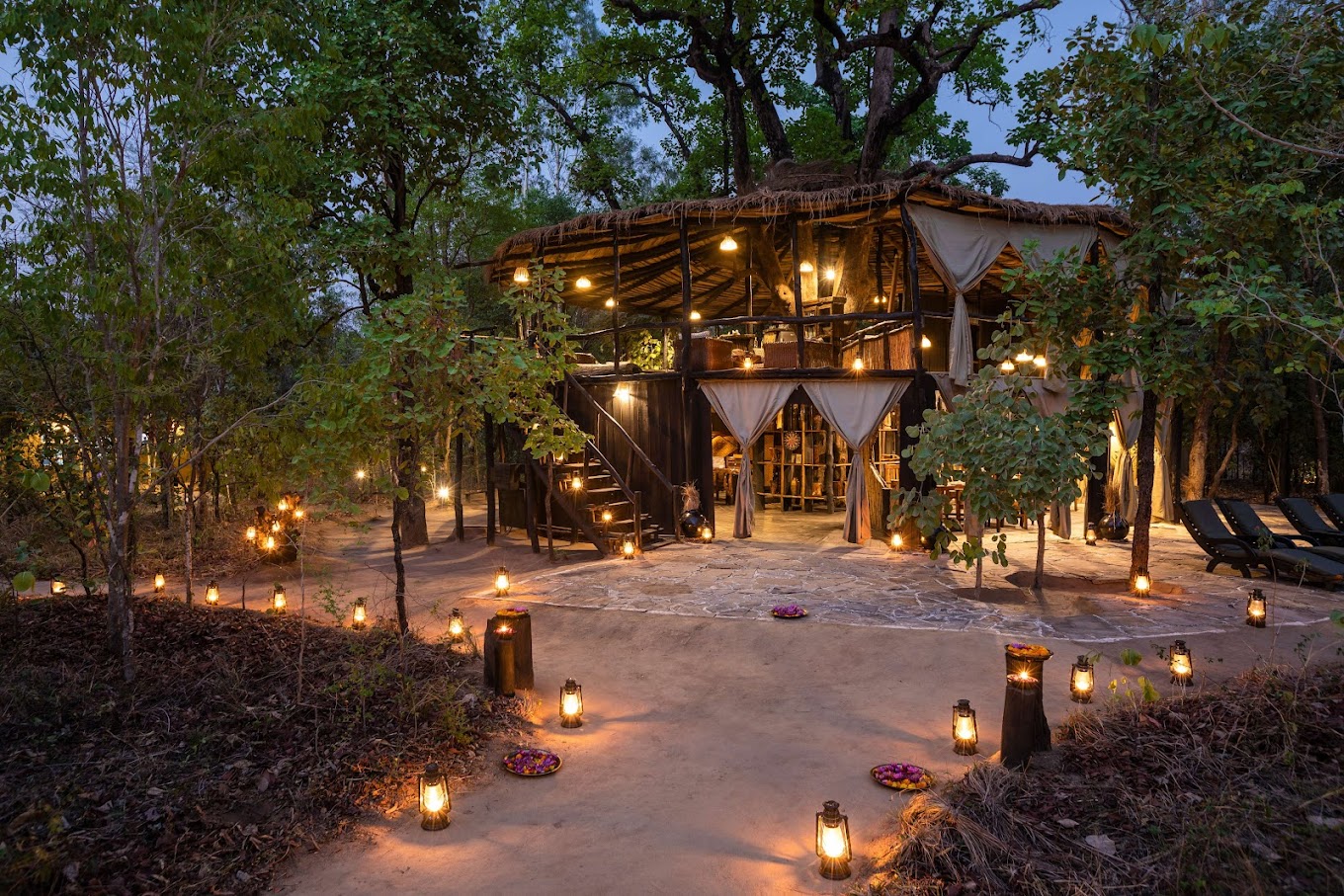
Wake up call with tea/coffee in the Tree House – thereafter depart on morning activity.
A selection of fresh fruit, bread, porridge, eggs to order, juices, and meats will be served in the dining room.
A visit to the viewing of big cats
A light lunch and salad bar will see you through the summer heat.
Afternoon tea, a selection of fine teas, filter coffee, fruit juice, sweet or savory snacks – thereafter depart on an afternoon drive.
Pre-dinner drinks and snacks served on the treetop Watering Hole with talks/presentations on wildlife.
Dinner, consisting of a starter, fire-cooked main meal, dessert, tea or coffee, and liqueurs if desired, will be served in the dining room.